


Bakesy: Home Bakery Biz App
Bakesy
Running a home bakery can begin with a handful of orders and quickly turn into a maze of messages, dates, customer requests, and payment decisions. Bakesy: Home Bakery Biz App is built for that exact kind of small food business. I see it as a business app for people who sell baked goods from home and want one place to bring their daily work together, rather than switching constantly between chats, notes, calendars, and separate business tools.
My first impression is that Bakesy is more useful when you treat it as an operating space for a small bakery, not as a general productivity app. Its focus is narrow in a good way: it is aimed at the practical routine of accepting and managing bakery work. That makes it more immediately relevant to a home baker than a blank spreadsheet or a broad project-management service, although it also means people outside this kind of business may find the app less compelling.
How Bakesy fits into a home bakery workflow
Bakesy is developed by Bakesy and belongs to the business category. It is free to install, with optional in-app purchases listed from $9.99 to $17.99 per item. That distinction matters. You can try the app without paying an upfront purchase price, but the presence of paid items means the full value depends on which parts of the experience are available without payment and which parts require an upgrade. I would not confuse “free” with “everything included.”
The app has been available since Jul 20, 2021, and its current version is 3.3.11. It runs on Android 7.0 or later, so it is accessible on many older Android devices as well as newer phones. Its Everyone age rating also makes sense for a business organizer aimed at home sellers rather than a product containing mature entertainment or sensitive material.
Its public reception is encouraging: Bakesy holds a 4.6 average from around 1.1 thousand ratings, with 191 written reviews, and has passed 100 thousand installs. Those figures do not replace personal testing, but they do suggest that the app has found a real audience among small-business users. I would especially pay attention to the written reviews before subscribing or buying anything, because bakery workflows vary widely and the right fit depends on how you take orders and communicate with customers.
Related News

Why WhatsApp Messenger Still Makes Everyday Communication Feel Easy

Jurassic World: The Game Is the Better Dino Tycoon for Strategic Players

Threads in Real Life: Who Should Join, Lurk, or Leave

How SHEIN Turned Shopping Into an Endless Content Feed

How to Make Fortnite Feel Smarter on Mobile

Should You Switch to Microsoft Outlook on Mobile?
A realistic day with the app
Imagine a baker receiving several weekend requests: a birthday cake, a dozen decorated cookies, and a last-minute batch of cupcakes. Without a dedicated system, the details may be scattered across direct messages, a paper notebook, and a phone calendar. The danger is not only forgetting an order. It is also overlooking a pickup time, missing a customization request, or accepting work on a date that is already overloaded.
This is where an all-in-one approach can make sense. I would enter each customer request as soon as it becomes serious, keep the order information tied to the business workflow, and use the app as the place to check what is due next. The benefit is less about one dramatic feature and more about reducing the number of places where important information can hide.
A useful habit is to separate “someone is asking about a product” from “this is a confirmed job.” If you treat every conversation as a final order, your schedule can become unreliable. If you wait too long to record confirmed work, you risk losing details. Bakesy is most valuable when I use it consistently at that boundary: capture the request, clarify the essentials, then keep the confirmed job visible in the same system.
Gallery
Why an all-in-one tool can beat a collection of general apps
A spreadsheet can track dates and prices, a calendar can show availability, and a messaging app can hold customer conversations. Each tool may be excellent at its own task, but the baker still has to connect them manually. That is the hidden cost of a patchwork setup. Every handoff creates another opportunity for a mismatch between what was discussed, what was scheduled, and what was actually agreed.
Bakesy’s strongest idea is therefore consolidation. Instead of asking a home baker to build a business system from generic parts, it presents itself as a single business tool designed around bakery work. For a solo seller, that can be easier to maintain than a spreadsheet with multiple tabs and carefully designed formulas. It can also feel less intimidating than a full small-business platform built for teams, inventory departments, and formal accounting processes.
There is a trade-off, though. General tools are flexible. A spreadsheet can be reshaped for almost any product, while a calendar can be used for deliveries, appointments, or production blocks. A specialized app is better when its assumptions match your work, but less attractive when your business has unusual requirements. If your bakery has complex wholesale orders, detailed ingredient costing, formal staff scheduling, or accounting needs, I would compare Bakesy with dedicated services before making it the center of everything.
Cost clarity and what “free” means here
The installation price is free, which makes Bakesy easy to test without committing money at the door. That is a meaningful advantage for a new baker who is still deciding whether a digital system will improve the business. The listed in-app purchase range is $9.99 to $17.99 per item, so paid value is present, but the amount does not by itself explain which functions are included in each purchase or whether a particular baker will need one.
My practical advice is to begin with the free experience and judge it against one complete order cycle. Do not evaluate it only by tapping through menus. Use it while taking a request, recording the important details, checking the upcoming workload, and preparing to complete the order. Then look carefully at any purchase screen before paying. The key question is not whether the price looks reasonable in isolation; it is whether the paid option removes enough daily friction to justify adding another business expense.
This is especially important for a home bakery with irregular sales. Someone selling occasionally to friends may not gain enough value from paid access to justify it. A baker handling regular custom work may view the same purchase differently because a smoother workflow can save attention every week. I would make that decision based on order volume and organizational stress, not on the app’s install count or rating.
Small workflow improvements that matter
One non-obvious advantage of a focused bakery app is the discipline it encourages. When all customer work is expected to live in one place, I am less tempted to rely on memory. That sounds basic, but memory is particularly risky when several orders share similar products and different pickup times. A written workflow also makes it easier to review the week before accepting another request.
A second useful practice is to use Bakesy as a capacity check rather than merely an order archive. Before saying yes to a new customer, I would review existing commitments and ask whether the requested date leaves enough room for preparation and communication. This helps avoid a common home-bakery mistake: counting only the baking time and forgetting decorating, packaging, cleanup, and the messages needed to finalize the job.
A third insight is that centralization can improve customer communication even when the customer never sees the app. When I keep the agreed details organized internally, my replies can be more consistent. I am less likely to ask a customer to repeat a flavor, date, or customization they already provided. The app’s value is therefore not limited to visible scheduling; it can support a calmer, more reliable service style behind the scenes.
Where the experience may feel restrictive
No all-in-one tool eliminates the work of running a bakery. I still have to decide what I can produce, confirm details with customers, calculate whether an order is worthwhile, and protect realistic preparation time. An app can organize those decisions, but it cannot make them for me. Someone hoping for a system that automatically solves pricing, production planning, or business strategy may be disappointed.
The other limitation is the risk of over-centralization. If every important business activity is placed inside one specialized service, moving later to another platform may take effort. I would keep essential business records in a form I can understand and preserve independently, especially if the bakery grows. Bakesy can be the daily workspace without necessarily being the only place where long-term records exist.
There is also a learning curve, even if the app is simpler than a collection of business tools. The first setup takes attention, and entering information twice during the transition from old notes can feel slower than continuing with the old method. I would not judge it during the first few minutes. The fair test is whether the routine becomes faster after the initial setup and whether I make fewer mistakes because the information is easier to find.
Who is most likely to get real value?
Bakesy is a strong candidate for a solo home baker who has moved beyond occasional informal orders. If customers regularly ask for custom cakes, cookies, cupcakes, or similar work, the need for a dependable order routine grows quickly. The app is also a sensible option for someone who dislikes building spreadsheets and wants a purpose-built starting point rather than designing a system from scratch.
It may also suit a baker who works primarily from a phone. Because the minimum Android requirement is 7.0, the app does not demand a very recent Android device. That can matter for a small business where replacing hardware is not a priority. I would still consider how comfortable the baker is entering detailed information on a mobile screen, since a phone-first workflow can be convenient for quick updates but less comfortable for large-scale administration.
I would be more cautious if the business is already operating like a larger bakery. Multiple employees, wholesale accounts, advanced stock control, production forecasting, or formal financial reporting may call for specialized systems with deeper controls. Bakesy’s appeal is its focus on the home-business stage; that same focus may become a limitation as the operation develops more complicated processes.
It is also not the obvious choice for a person who only wants a basic calendar. If all you need is a reminder for two weekend orders, a regular calendar may be faster and cheaper to maintain. Likewise, if your main problem is accounting rather than order organization, an accounting application will probably deliver more relevant value. Bakesy makes the most sense when the problem is the overall flow of home-bakery work.
Questions I would settle before relying on it
The first question is whether the free access is enough for my actual workflow. I would answer that by entering representative orders and checking whether the free experience supports the tasks I perform most often. Since paid items are available, I would inspect the exact purchase description rather than assuming every business function is included from the start.
The second question is whether it can replace my existing tools completely. My answer would be: possibly for day-to-day organization, but not automatically for every business need. I would keep any separate system that handles a specialized responsibility better, such as formal bookkeeping or detailed production analysis. An all-in-one app should reduce duplication, not force every task into an unsuitable format.
The third question is whether it works for a business that is still small. Yes, that is where I see the clearest fit, provided the baker actually has enough orders to feel the organizational pressure. A beginner with only occasional sales may find the setup unnecessary, while a growing home bakery may appreciate having a structure before missed details become a serious problem.
The fourth question is whether the app is worth paying for. I would not answer that from the rating alone. I would compare the listed purchase cost with the time and mistakes it could save in a normal month. If the app helps me avoid one costly scheduling error or makes recurring order administration noticeably easier, the paid option may be sensible. If I rarely use it, the free access may be the more rational stopping point.
My verdict for home bakery owners
Bakesy is a focused business app with a clear reason to exist: helping home bakers bring scattered order and customer work into a more organized routine. I like its specialized direction more than the idea of forcing a new baker to assemble a business system from unrelated general apps. The free installation lowers the barrier to testing it, while the paid items mean I would evaluate upgrades carefully instead of assuming the entire experience is free.
My recommendation is strongest for solo bakers who are handling enough custom work to feel overwhelmed by messages, notes, and calendar entries. Start with one real order cycle, build the habit of recording confirmed work promptly, and use the schedule as a capacity check before accepting new requests. That approach reveals its practical value much faster than browsing the interface.
I would skip it if I only need a simple reminder tool, if my business already requires advanced accounting or wholesale management, or if I am unwilling to maintain a central record of orders. For everyone in between, Bakesy is worth trying because its usefulness comes from reducing everyday fragmentation rather than promising a miracle. My bottom line: test the free experience first, then pay only if it genuinely makes your bakery easier to run.
FAQs for Bakesy: Home Bakery Biz App
What is Bakesy: Home Bakery Biz App used for?
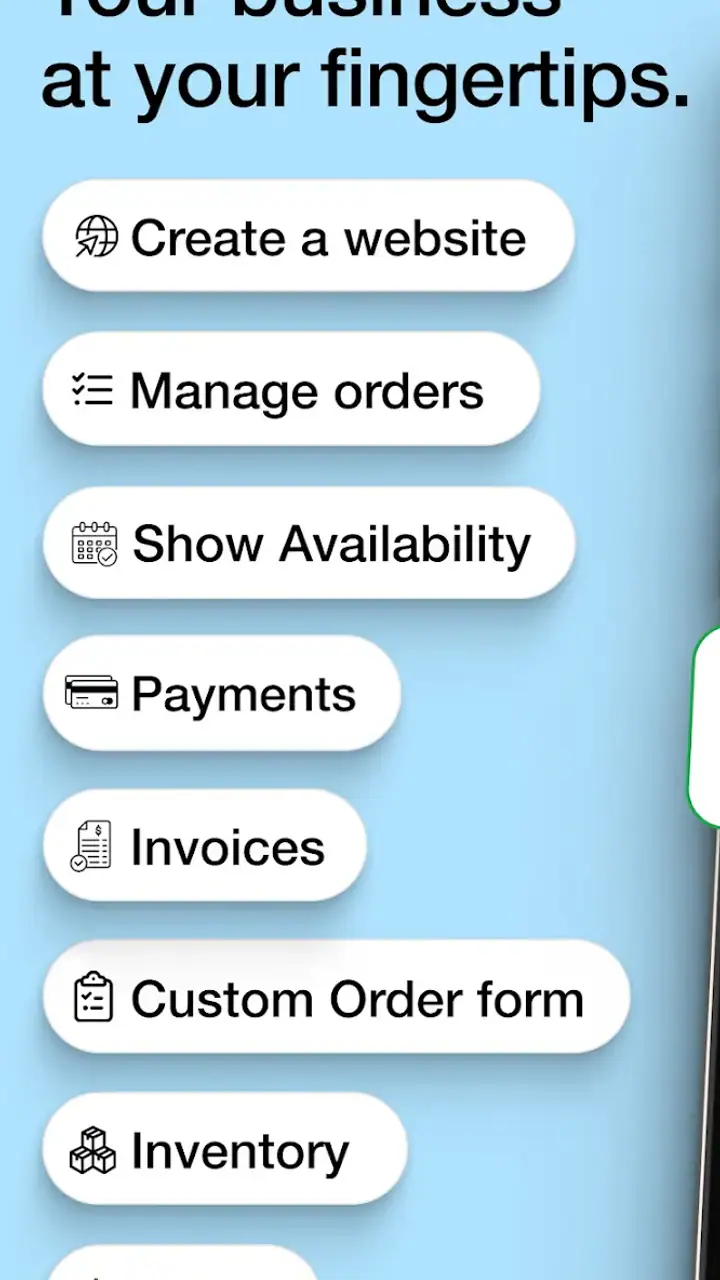
Bakesy is designed to help home bakers manage the business side of selling baked goods. It can bring customer orders, menus, payments, pickup or delivery details, and basic business organization into one place. Instead of relying only on social media messages and spreadsheets, bakers can use the app to present offerings more clearly and keep track of what needs to be prepared.
Is Bakesy suitable for beginners who are starting a home bakery?
Yes, Bakesy can be useful for beginners because it focuses on practical tasks rather than requiring advanced business or technical knowledge. You can use it to organize products, receive orders, communicate important details, and create a more professional ordering experience. However, new sellers should still check local food-safety, licensing, tax, and home-business requirements before accepting orders.
Can customers order baked goods directly through Bakesy?
The app is built to support a more direct ordering process between home bakers and their customers. Depending on the baker’s setup and selected features, customers may be able to view available products, choose options, select collection or delivery information, and submit order details. The exact experience can vary, so sellers should review the current plan and available ordering tools before relying on it as their only sales channel.
Does Bakesy handle payments, pickup, and delivery arrangements?
Bakesy can help organize important order information, but the precise payment, pickup, and delivery features may depend on the account type, region, integrations, and current app version. Bakers should confirm whether online payments, deposits, delivery charges, scheduling, and customer notifications are supported in their location. It is also important to communicate collection windows and delivery policies clearly to avoid misunderstandings.
Is Bakesy free to download and use?
The app may be available to download without an upfront charge, but some business tools can require a subscription, paid plan, transaction fee, or in-app purchase. Pricing and included features may change over time, so prospective users should check the latest information in the Google Play Store or Apple App Store and review the terms carefully. Compare the cost with the time saved managing orders and customers.
Pros
- Simple tools for managing orders
- customers
- and pickup details
- Helps home bakers present products professionally to customers
- Useful for organizing custom cake and dessert requests
- Can reduce reliance on scattered messages and spreadsheets
- Supports a more consistent workflow for small baking businesses
Cons
- May be excessive for bakers handling only a few orders per month
- Business features may require time to configure and learn
- Availability of some tools can depend on the selected plan
- Customers may still prefer ordering through familiar social platforms
- Not a replacement for accounting
- inventory
- or delivery software


